


House of many courtyards
- Beach house
- 2015
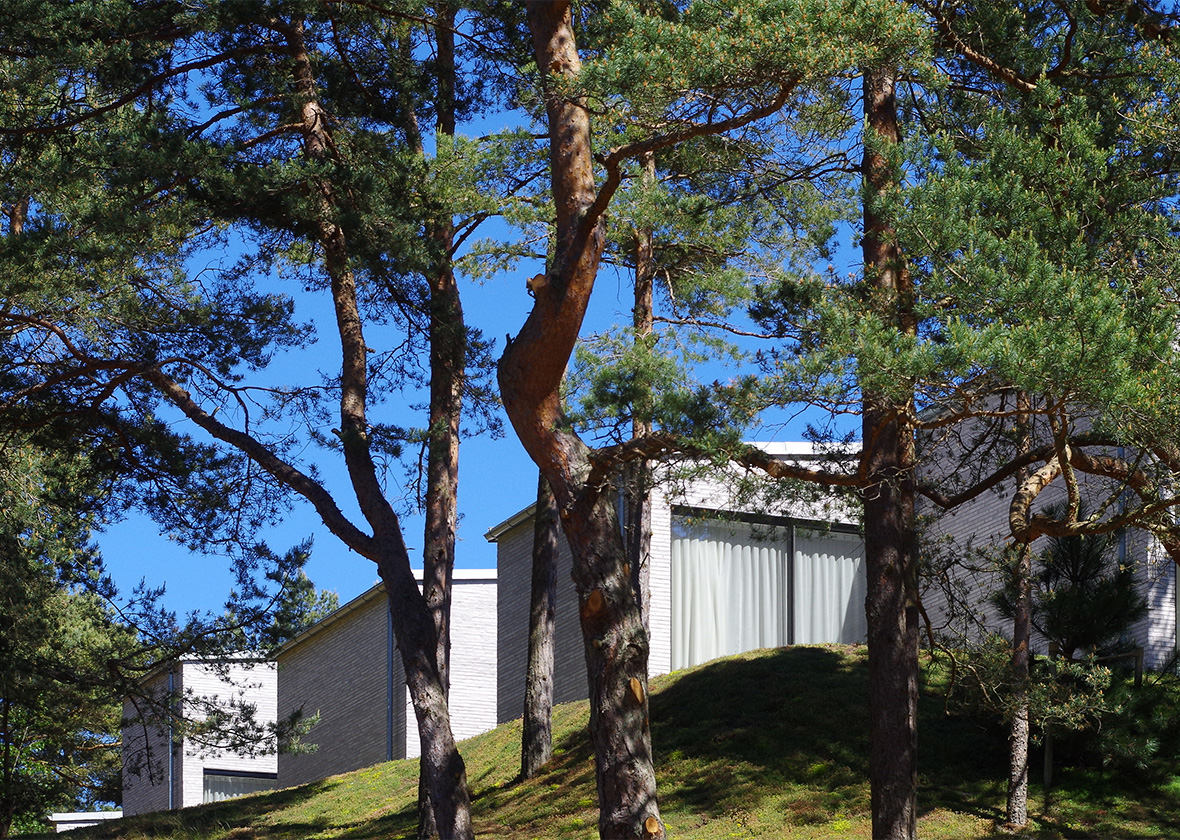
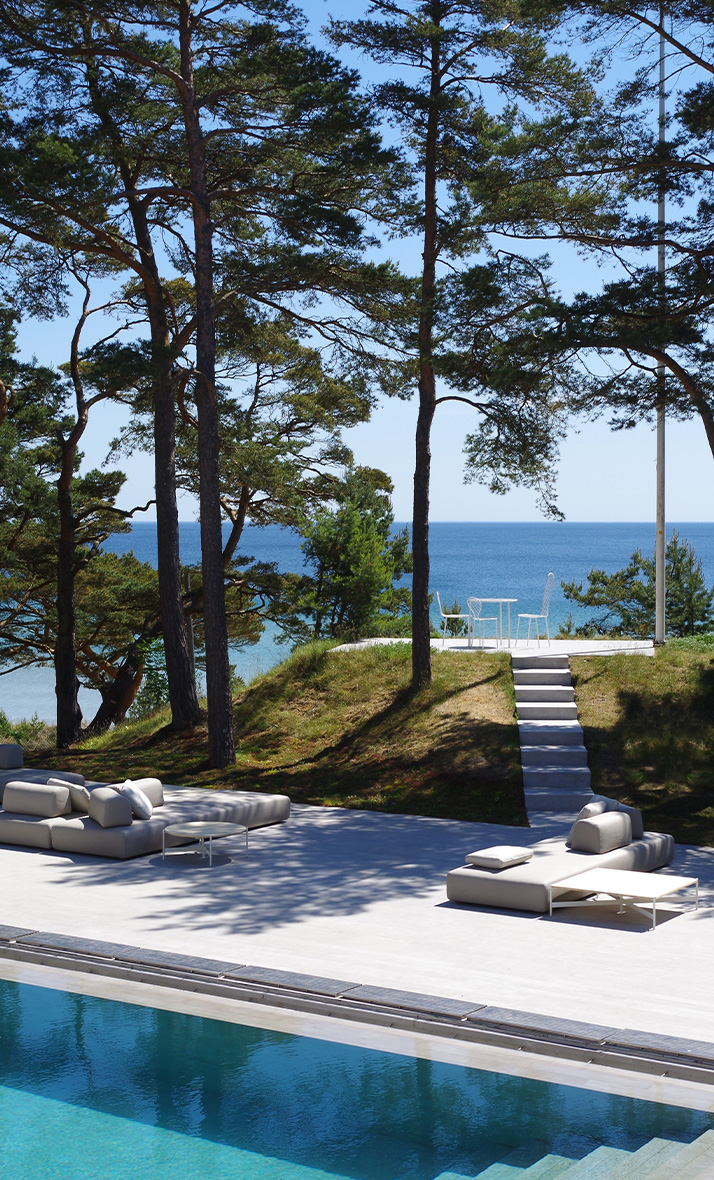
Hidden just on the tree-line, behind a sandy ocean beach, the building allowance was a mere 140 m2 (plus a 30 m2 guesthouse) but the wish was for a 340 m2 house. How to double the area while still adhering to the regulations?
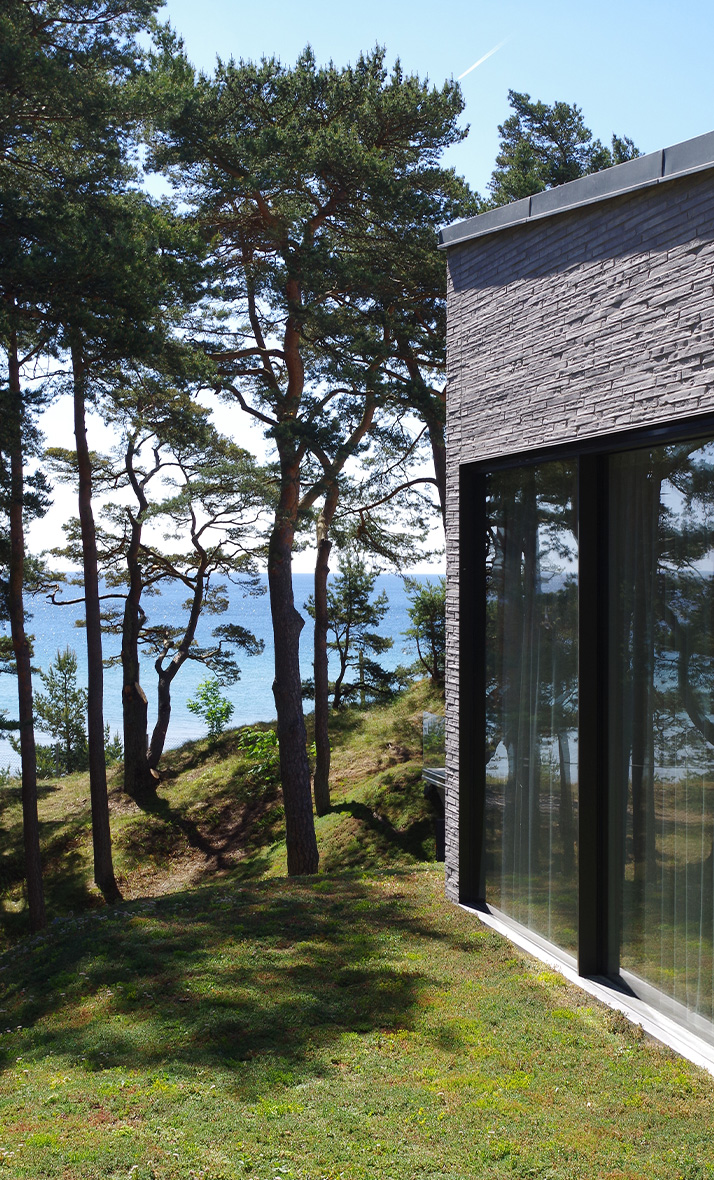
Besides the size of the house, another requirement in the brief was for maximum privacy with maintained contact with the beach and the horizon. Or, in other words, great views from inside but little visibility from outside. And the house itself should blend in with its setting as best possible.
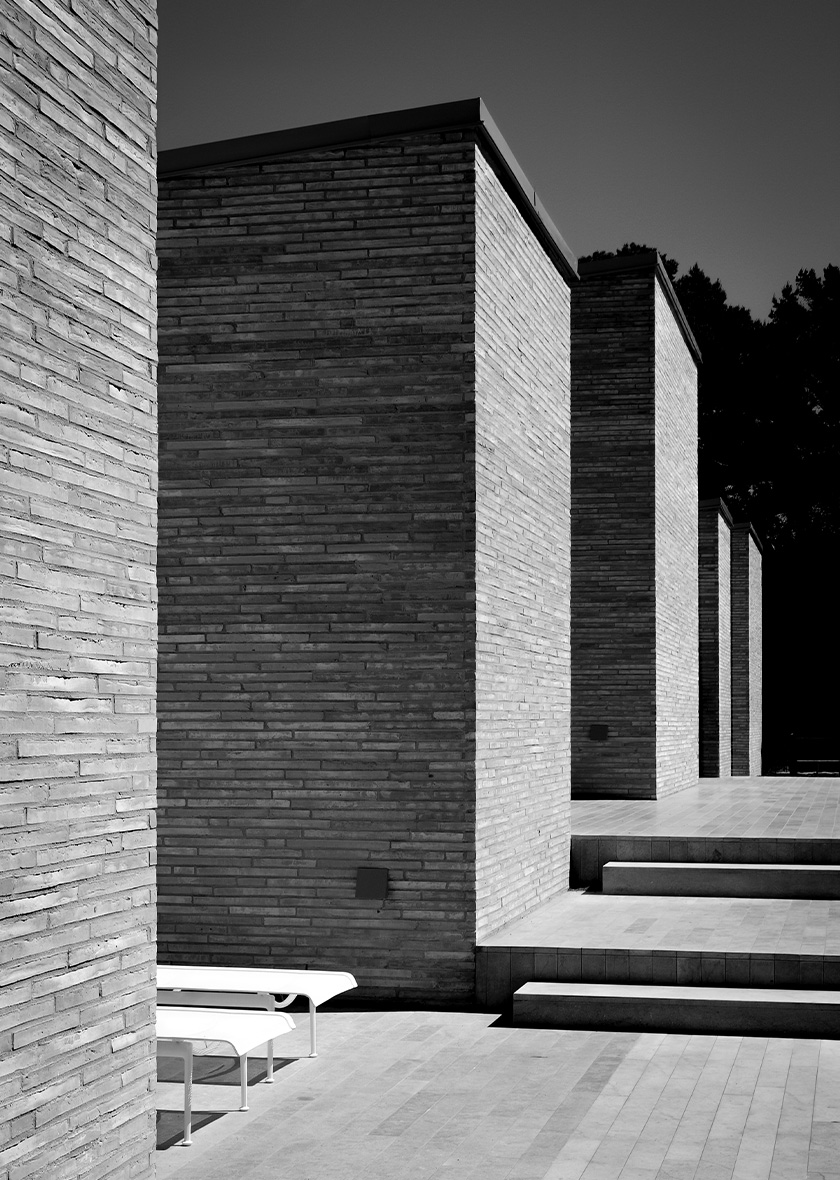
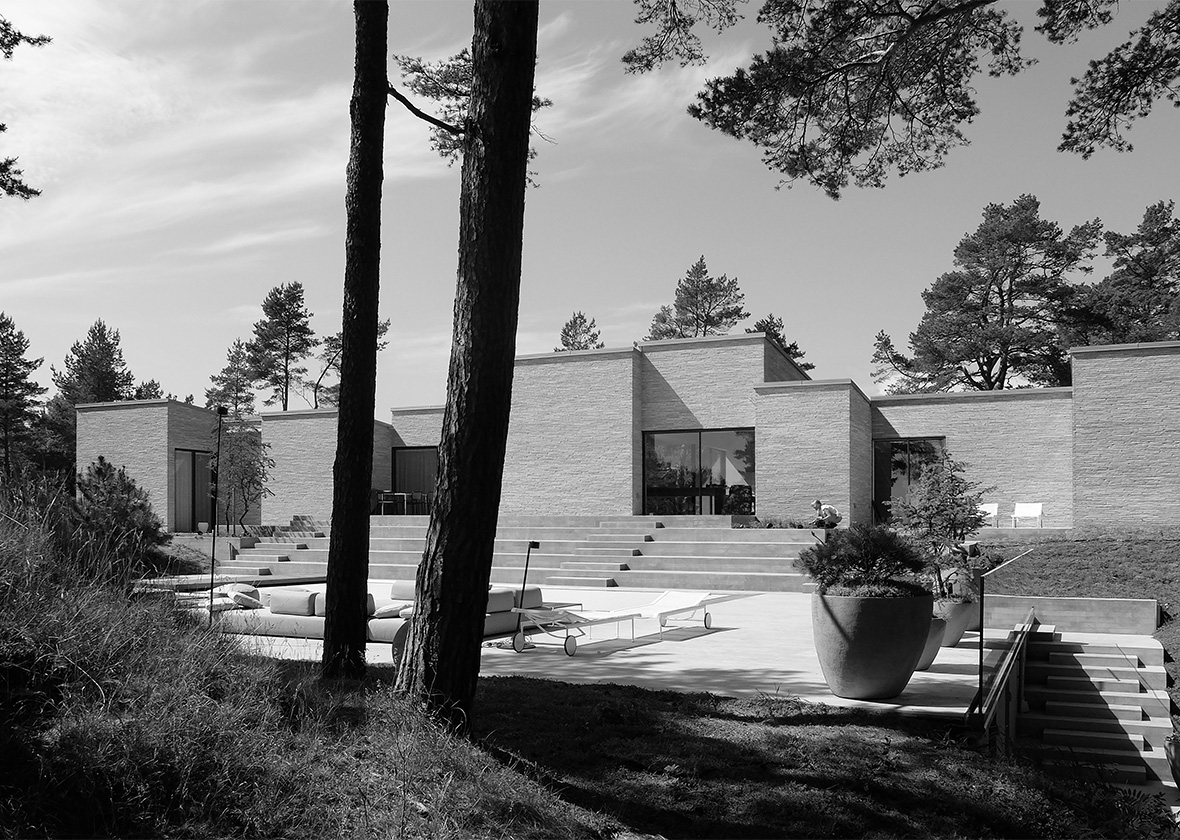
The solution came with an imaginary slicing of an elongated box and dislocating of the parts in alternating, parallel order. Thus, ending up with a number of outwardly open courtyard terraces – one in each gap. In principle, like the camshaft in a multiple-piston engine. In the façade, each protruding box is a closed wall while full glazing is inside the courtyards – sometimes at their deep end, sometimes sideways facing. Besides framing each view, the outlooks become very private.
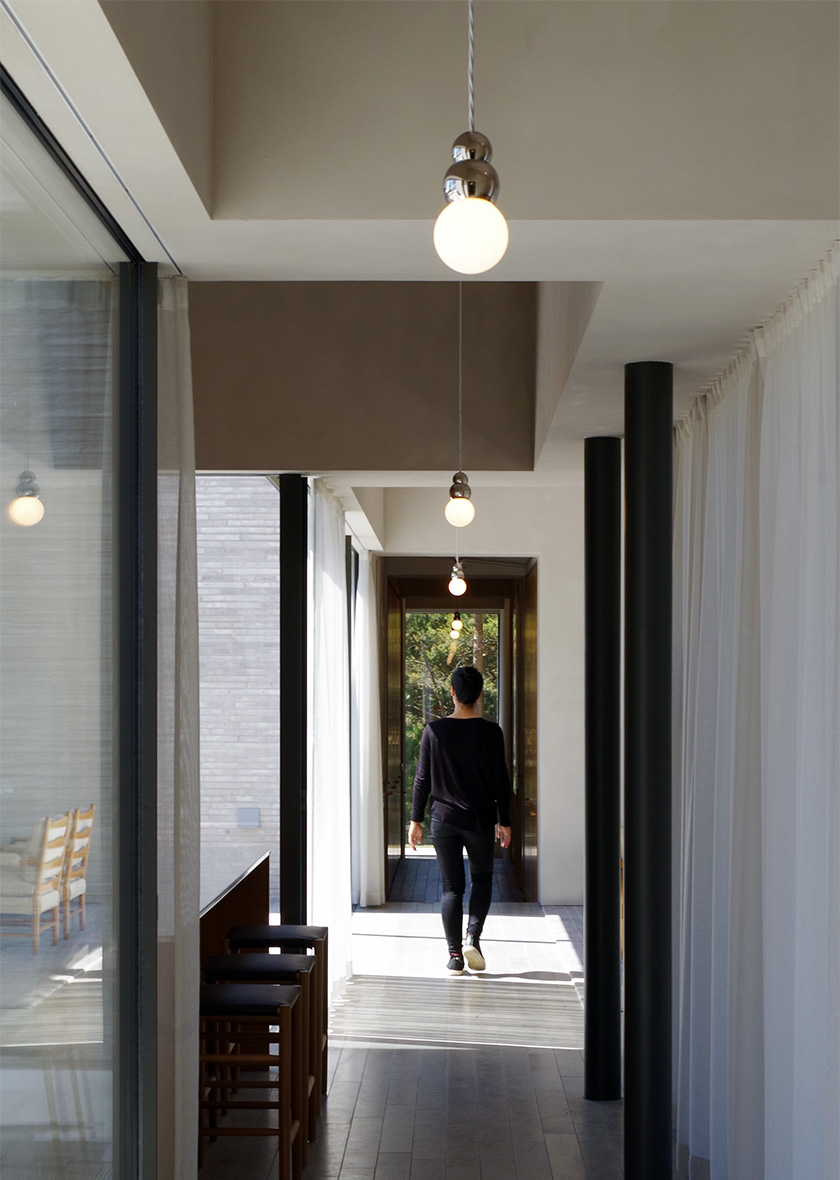
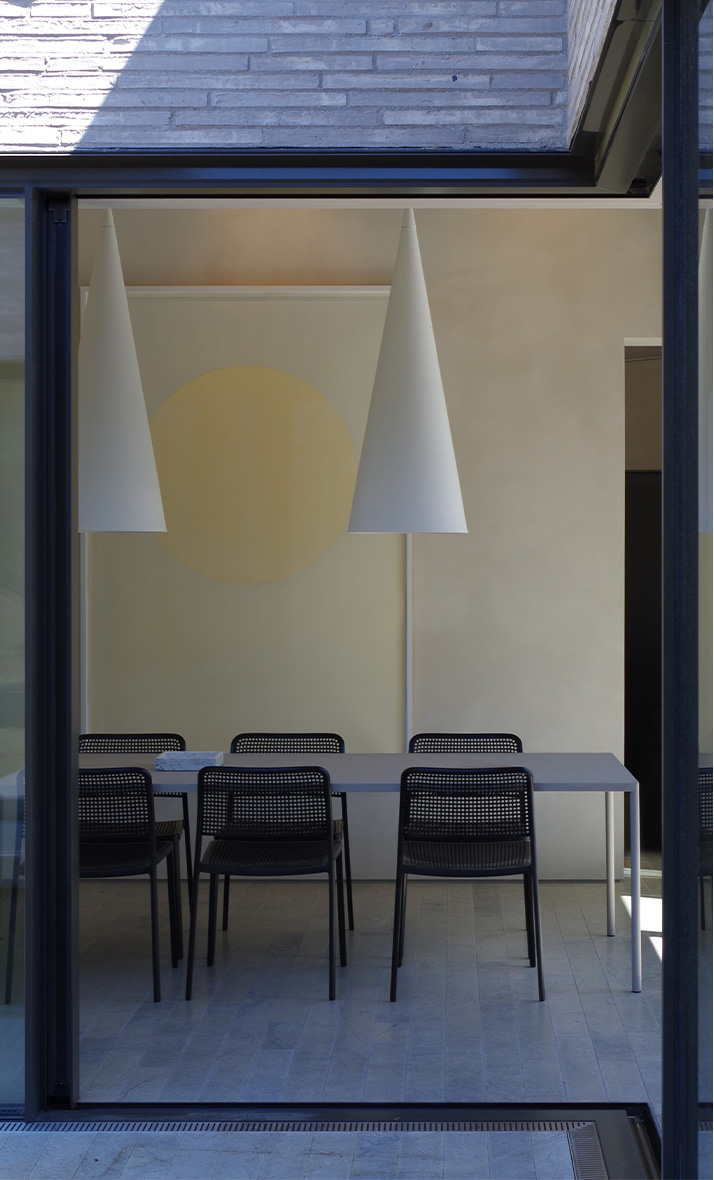
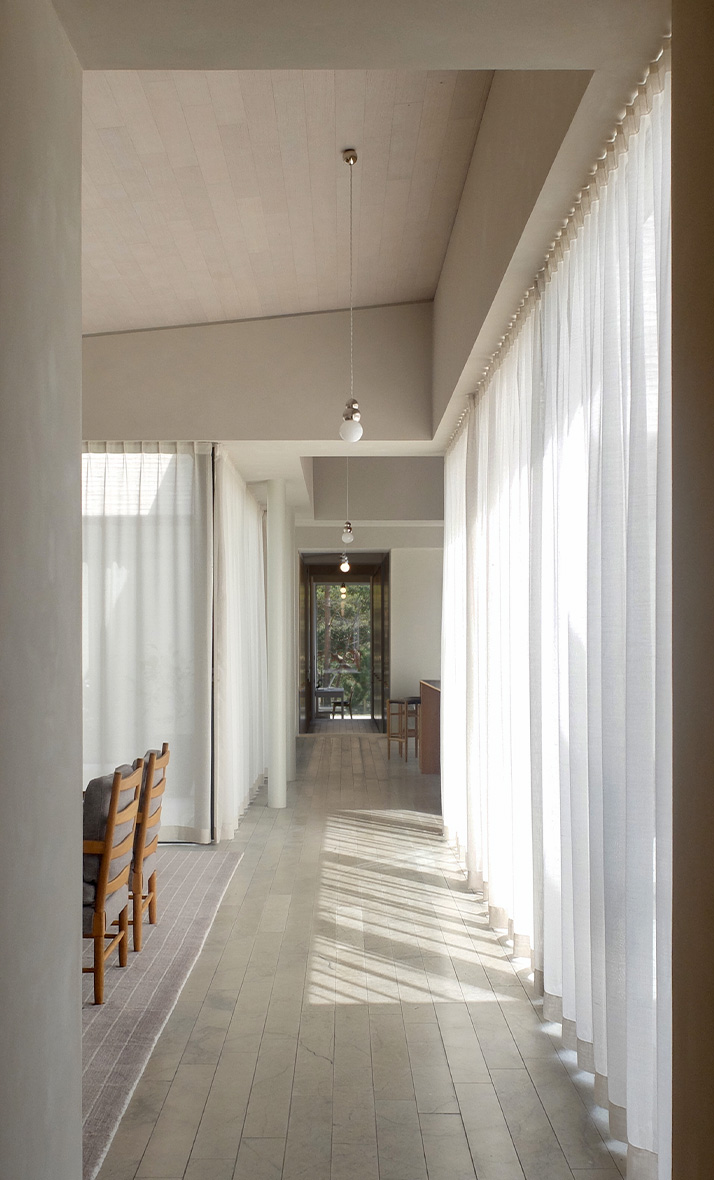
The house has the appearance of a series of individual boxes that in reality is one interior connected via a 40 metre long central communication axis – from end to end functioning like a corridor, but in each space a part of the room. The internally glazed courtyards are perceived as a continuation of each indoor space, doubling the experience. Weather permitting, they can be opened up to a very large extent to actually become continuations of the rooms.
Each box was given a unique ceiling height in accordance with the function and proportion of the room, like a strand of beads of various sizes. This makes moving through the house an ever-changing spatial experience.
The materials are Petersen Kolumba brick walls, hardwood ceilings and limestone floors and terraces. The same long and flat proportion of the bricks was used in the floor-laying pattern as well as in the ceilings. The colour of the handmade bricks was matched with the local colour of the sand of the beach. The house is not camouflaged but both colour and geometry form an abstraction very true to the surrounding nature and topography.